Learn music
Hindustani vocal classes in Dubai & online
Learn to sing with Sumedha Dey, disciple of Pandit Ajoy Chakrabarty, in warm and patient one-to-one and small-group lessons, in person in Dubai or live online from anywhere in the world.
Whether your child is four or you are starting fresh at sixty, every lesson begins where you are: your voice, your pace and your goals.
For ages 4 to 60 · In person & online
Online classes
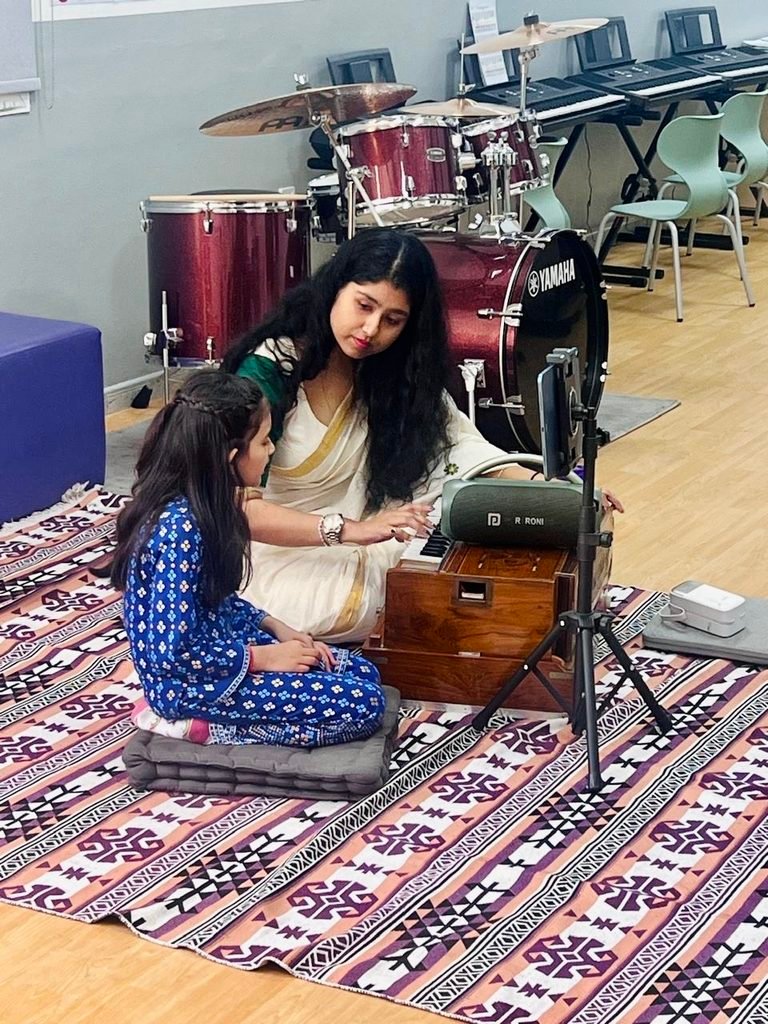
Learn live with Sumedha, from anywhere
One-to-one and small-group lessons on Zoom or Google Meet, for students in India, the UAE and around the world.
Live, face to face
Real-time lessons where Sumedha hears every note and corrects it as you sing.
Any time zone
Class times that suit India, the Gulf, the UK, Europe and North America.
Practice between lessons
Exercises and notes shared after each class, so you know exactly what to practise.
Simple to join
A phone or laptop, earphones and a quiet corner are all you need.
Online · Worldwide · English, Hindi & Bengali
Who it’s for
Lessons for curious kids and grown-up beginners
Your child, growing through music
Short, playful lessons that suit young attention spans, with real progress you can hear at home.
- Confidence to sing in front of others
- Focus, patience and a daily practice habit
- A living link to Indian culture and language
- Stage chances at school events, recitals and competitions
- Honest feedback on how your child is doing
It’s never too late to sing
Start from zero or return to music after years. Lessons fit around work and family life.
- No musical background needed
- Find your natural range and a healthier voice
- Learn the raags and songs you love
- A calm hour for yourself every week
- Classes in English, Hindi or Bengali
Class levels
A path for every stage
Not sure where you fit? Sumedha listens first, then suggests the right level.
First steps
Sargam, simple bhajans and songs, and a love for riyaz. We build a steady pitch and a confident voice.
Building the foundation
Alankars, taal, the first raags and bandish. Students learn to listen, practise on their own and sing in tune with the tanpura.
Raag and khayal
Vilambit and drut khayal, alaap and taan, and preparation for exams, competitions and the stage.
Her teaching method
How Sumedha guides every student
The same guru-shishya way she learned from Pandit Ajoy Chakrabarty: listen closely, build slowly, and never skip the foundation.
Listen and understand
The first lesson is about you: Sumedha hears your voice, checks range and pitch, and understands your goals. Then she sets a clear plan.
Build the voice
Sargam with the tanpura, breathing, posture and the long, steady Sa. Simple alankars (paltas) train the ear and make the voice flexible.
Rhythm and first songs
Clapping the taal, keeping time with the tabla, and the first bandish, bhajans or songs, so music feels joyful from the start.
Enter the raag
One raag at a time, such as Yaman, Bhupali or Bhairav: its notes going up and down, its signature phrases and a short khayal.
Improvise and grow
Alaap, bol-taan and taan, and in time the slow vilambit khayal. Students learn to create music within the rules of the raag.
Perform with confidence
Recitals, competitions and music exams. Sumedha prepares each student for the stage, step by step, until they are ready.
The art behind the lessons
Hindustani classical music, simply explained
A centuries-old tradition from North India, built on raag and taal and passed from guru to student. Here are the ideas every student meets on the way.
Raag
A melodic framework: a set of notes with rules for how they rise and fall, which phrases to stress and the mood they create. Yaman feels serene; Bhairav, solemn and early-morning. Many raags belong to a time of day.
Swar
Sa Re Ga Ma Pa Dha Ni, the seven notes of Indian music. Sa and Pa stay fixed; the others can be komal (flat) or, for Ma, tivra (sharp), giving twelve notes in all.
Taal
A repeating cycle of beats, kept on the tabla. Teentaal has 16 beats, Ektaal 12 and Jhaptaal 10. Singer and tabla meet on the first beat, the sam.
Khayal
The main form of Hindustani classical singing. It opens slowly in vilambit (slow) tempo and builds to drut (fast), with the singer improvising inside the raag.
Bandish
A short song set to a raag and a taal. It is the fixed point a singer returns to, and learning many bandishes is how a student truly absorbs a raag.
Alaap & Taan
Alaap is the slow, free exploration of a raag’s notes. Taans are fast, flowing runs that show agility, breath control and imagination.
Gharana
A lineage of singing passed from guru to student. Pandit Ajoy Chakrabarty is known for the Patiala-Kasur style, loved for its lyrical expression and brilliant taans.
Riyaz
The quiet, regular practice behind every great voice, often starting with a long, steady Sa. Little by little it builds pitch, breath and stamina.
What you’ll learn
Everything a complete singer needs
Swar & sargam
Sing in tune with the tanpura, from the very first Sa.
Raag & khayal
Bandish, alaap and taan in the Hindustani classical tradition.
Bhajan & light classical
Devotional songs and semi-classical forms.
Bangla gaan
Rabindrasangeet and much-loved Bengali songs.
Voice culture & riyaz
Breath, range and daily practice habits that last.
Music theory
Notation, taal and theory for school and music exams.
Stage confidence
Performance practice for concerts, events and competitions.
Singing together
Group singing and rehearsals for school and community events.
How classes work
Choose the way you learn best
Learn in person in Dubai or live online from anywhere in the world.
One-to-one
Lessons shaped around one student’s voice, goals and pace.
Small groups
Learn alongside others, build confidence and sing together.
Exam preparation
Focused guidance for music examinations, including theory.
Live online
Real-time lessons on Zoom or Google Meet, wherever you live.
Classes in English · Hindi · Bengali
Kind words
What students and parents say
Real words from the families who learn with Sumedha.

Mridul Balakrishnan
★★★★★
My son has been learning from Sumedhaji for the past few years, and what truly stands out is her commitment to perfection. Every detail matters to her – from the teaching environment & instruments to every nuance of a bandish/song.
What I admire most is her ability to inspire children to practice and improve on their own. She has a unique way of nurturing both discipline & a genuine love for music.
My son's progression from vocal training to singing with harmonium accompaniment felt very natural under her guidance, and it has been wonderful to see his confidence, understanding, and appreciation of music grow over the years.
Priyank Sharma
★★★★★
She is a highly trained classical vocalist and a student of Pt. Ajoy Chakraborty. She has excellent knowledge of classical music and knows exactly what to teach and how to guide each student. Her advice is always valuable and helps students understand where they need to improve. Regular practice and dedication are up to the students, but having the right teacher makes a big difference. It is difficult to find such dedicated and knowledgeable classical music teachers in Dubai. Truly grateful to learn from her.
Tinni Ghosh
★★★★★
Sumedha is an excellent teacher, she is very calm & patient with children.
Saptarshi Mondal
★★★★★
I am absolutely delighted to share my wonderful experience with such a talented music teacher. Not only is this person a masterful educator, but they are also an incredibly gifted singer who performs with true heart. I feel so fortunate to have found a mentor who can demonstrate techniques as beautifully as they explain them. Every lesson feels like a concert performance held right in a cozy music studio 🎼. Their ability to inspire passion while teaching complex vocal skills is truly remarkable. I highly recommend their classes to anyone looking to elevate their artistry to the next level 🌟.
Arobind Bose
★★★★★
Excellent institution of repute.. Concept of Music is well explained by experienced teachers and well practised.
How to start
Start in four simple steps
Say hello
Send a WhatsApp message with the student’s age and any experience.
Meet Sumedha
A first lesson to hear the voice and understand your goals.
Pick your plan
Choose one-to-one or a group, and a weekly time that suits you.
Begin your riyaz
Regular lessons, simple practice at home and steady progress.
Questions
Frequently asked questions
What age can my child start?
Children can start from about four years old. Lessons for young learners are short and playful, built around listening and singing.
Do I need any musical background?
No. Beginners of every age are welcome. We start with the basics and build from there.
Which languages are classes taught in?
English, Hindi and Bengali.
Do you prepare students for music exams?
Yes. Students are trained for music examinations, including the theory side of music.
How much do classes cost?
Fees depend on the type of class and how often you come. Send a WhatsApp message and we’ll share the current fees and timings.
Where do classes take place?
In person in Dubai, and live online for students anywhere in the world. Message on WhatsApp for timings and the class location.
How do online classes work?
Lessons are live on Zoom or Google Meet, at a time that suits your time zone. All you need is a phone or laptop, earphones and a quiet room. After each class Sumedha shares the exercises and notes to practise.
Begin your journey in Hindustani classical music
Tell us a little about yourself or your child, and we’ll find the right class together.